


If you regularly wake with jaw pain, dull headaches, or tender teeth, you may be grinding your teeth in your sleep without realising it. This unconscious habit, known as bruxism, is a leading cause of enamel wear, cracks, and muscle tension. Over time, it can lead to dental injuries, damage to fillings or crowns, and chronic discomfort in the neck and jaw.
A simple yet powerful solution is the night mouth guard. Worn while you sleep, this small device acts as a barrier between your upper teeth and lower jaw, reducing the strain from clenching and grinding. Whether you’re dealing with mild irritation or long-term pain, using a properly fitted night guard can make a huge difference in protecting your smile and improving overall oral health.
Why Use a Night Mouth Guard
Night-time teeth grinding places enormous stress on your teeth, sometimes exceeding the force used for chewing food. That repetitive motion can wear down enamel, chip or fracture teeth, and cause inflammation in the gums. It also overworks the muscles around the jaw, neck, and lips, which can lead to tightness or fatigue the next morning.
A night mouth guard provides a cushion that absorbs the pressure of grinding, preventing the upper and lower teeth from making direct contact. By distributing force evenly, it relieves strain on the jaw joints and helps maintain a healthy bite.
Common Signs and Symptoms
You may need a guard if you experience any of the following symptoms or signs:
- Soreness or stiffness in the jaw when you wake
- Frequent headaches or tension in the neck
- Worn or chipped teeth
- Tooth sensitivity or loose fillings
- Pain or clicking when opening your mouth
- Interrupted sleep from unconscious clenching
Grinding is often stress-related but can also occur due to an uneven bite or missing teeth. Many adults don’t notice it until their dentist observes flat or worn enamel during a routine check-up.
Benefits Beyond Protection
Using a night guard delivers several lasting benefits:
- Protect your teeth from cracks, enamel loss, and breakage.
- Ease jaw pain, stiffness, and facial muscle tension.
- Improve sleep quality by reducing unconscious jaw activity.
- Prevent further dental damage or costly restorative work.
- Support long-term oral health by preserving your natural teeth.
If untreated, bruxism can worsen over the weeks and months, leading to deep fractures or root exposure. Wearing a guard is an easy and effective step toward prevention.
How a Night Mouth Guard Works
To understand why these devices are so effective, it helps to look at what happens inside the mouth. During sleep, people who grind their teeth unconsciously move the jaw in small, repetitive motions. This friction creates heat and stress across the tooth enamel surface.
A night guard works by placing a slim protective layer between the upper teeth and lower jaw. The guard absorbs that force and keeps the bite slightly separated, preventing tooth-to-tooth contact.
What the Guard Does
- Reduces pressure: The soft or semi-rigid material distributes pressure evenly, so no single tooth takes the full impact.
- Relaxes muscles: Prevents overuse of jaw and neck muscles that can cause pain or stiffness.
- Protects enamel: Acts as a buffer to prevent chipped or fractured teeth.
- Keeps airways open: Maintains smooth air flow through the mouth and nose, helping you breathe freely.
- Prevents gum irritation: Minimises rubbing or pinching of the gums during clenching.
The outcome is simple. Less tension, less wear, and healthier teeth.
The Role of Proper Fit
Comfort is essential for consistent use. A guard that’s too tight can create discomfort or pressure on the gums, while a loose one may slip out during sleep. A custom fit ensures that your night mouth guard stays secure and comfortable, providing the best protection without restricting movement or air flow.
Types of Mouth Guards and How to Choose the Right One
There isn’t a one-size-fits-all solution. Different mouth guards are available depending on your needs, preferences, and budget. Understanding each option helps you make an informed purchase and get the most convenience and value.
Stock Mouth Guards
These come pre-formed and ready to wear straight out of the packet. They’re the least expensive but also the least adaptable. Stock guards tend to be bulky, which can make them uncomfortable or cause you to wake during the night if they shift.
Suitable for: short-term use, light grinding, or as a trial before getting a custom version.
Boil and Bite Mouth Guards
 A popular middle ground option, these guards are softened in boiling water or hot water, then moulded to your teeth. The fitting process is simple:
- Heat water in a bowl until near boiling.
- Submerge the guard until the material softens.
- Remove carefully, let it cool slightly, then bite down to form your impression.
- Rinse briefly in cool water to set the shape.
This creates a semi-custom fit that’s far more comfortable than a stock version. The downside is that they may lose their shape over weeks of use, especially if exposed to excessive hot water during cleaning. Suitable for: people who need a low-cost, short-term guard with moderate protection.
Custom-Made Night Guards
The gold standard is a custom guard crafted by your dentist. During your appointment, the dentist takes a detailed impression of your teeth and sends it to a dental lab, where technicians fabricate the guard for an optimal fit.
Custom guards are often BPA-free, designed for durability, and tailored to your unique bite and jaw structure. They feel thinner, more natural, and less intrusive, allowing you to speak and breathe normally.
Advantages:
- Long-lasting and resistant to wear.
- Offers superior protection for heavy grinding.
- Provides maximum comfort and stability.
- Can accommodate braces or dental restorations.
While the upfront cost is higher, many adults and customers find that the comfort and longevity easily justify the price, particularly if their insurance covers part of the cost.
Materials and Safety
High-quality guards are made from safe, durable dental materials that are both flexible and strong. They’re designed for long-term comfort and everyday use. Some guards feature layered construction, a soft inner lining for comfort and a rigid outer layer for impact resistance. This combination helps the guard maintain its shape and offer reliable protection night after night.
Which Type Should You Choose
If you have mild bruxism, a boil-and-bite guard may suffice. But if you experience frequent jaw pain, cracks, or heavy grinding, a dentist-made guard offers far greater stability and protection. Always choose a guard that feels comfortable, doesn’t restrict air flow, and stays secure through the night.
Why Custom Guards Are Worth It
Beyond comfort, a custom fit reduces the risk of irritation and ensures the guard aligns smoothly with your bite. Ill-fitting guards can cause soreness along the gums or even worsen existing jaw tension. With a professional model, your dentist can also adjust thickness and shape according to your grinding severity, ensuring your mouthguard offers the right balance between flexibility and strength.
Final Thoughts on Mouth Guard Types
Stock guards offer quick and simple protection but limited comfort. Boil-and-bite guards give a better fit for moderate grinding, while custom dentist-made guards provide the best balance of comfort, durability, and protection. The right option will depend on your level of bruxism and your dental needs.
The Fitting Process: Achieving a Comfortable Fit
The fitting process for a night mouth guard depends on whether you choose a professional or an at-home option. A good fit ensures the guard feels secure, doesn’t restrict air flow, and provides balanced protection across your teeth.
Dentist-Made Night Guards
If you visit a dentist for a custom design, the process is straightforward and generally takes one to two weeks from start to finish.
- Consultation and Assessment: Your dentist examines your mouth and bite, looking for signs of bruxism, pain, or existing wear. They will also discuss your symptoms, such as morning stiffness, headaches, or jaw pain.
- Impression and Design: A dental mould or digital scan is taken of your upper teeth or lower jaw. This detailed impression helps create a custom fit that sits comfortably without pinching your gums or altering your bite.
- Fabrication: The mould is sent to a dental lab, where the dental mouthguard is made from safe, high-quality materials designed for comfort and durability.
- Fitting Appointment: Once ready, your dentist checks the fit and makes small adjustments to fine-tune comfort and protection.
- Follow-Up: After a few weeks of use, a follow-up visit ensures the guard remains stable and not causing discomfort.
Professional guards are known for their comfortable fit and long lifespan, making them a good option for adults who grind heavily or have braces.
At Home Boil and Bite Guards
If you opt for an over-the-counter version, you’ll need to shape it yourself. Follow these basic instructions:
- Fill a bowl with boiling water and let it cool slightly before submerging the guard.
- Leave it for the recommended time on the packaging. Overheating can damage the material.
- Remove with tongs, allow to cool for a moment, then insert it into your mouth.
- Bite down gently to form your impression, pressing lightly with your fingers and tongue for an even shape.
- Rinse in cool water to set the form.
The guard should hug your teeth securely without feeling tight or uncomfortable. If it irritates your gums, repeat the heating step or trim any rough edges.
What to Expect in the First Few Nights
It’s normal to feel slight discomfort while adjusting. Some people may drool more or find speaking tricky at first, but these effects fade within a few nights. If you still experience pain after a week, it may mean the guard doesn’t fit your bite properly. Contact your dentist for an adjustment or replace it if necessary.
A well-fitted night guard should make you forget you’re even wearing it. It offers reliable protection without affecting your sleep.
Caring for Your Night Mouth Guard
Proper cleaning and care extend your guard’s lifespan and prevent odours or bacterial buildup. Since it sits in your mouth for hours every night, keeping it clean is essential for both comfort and good oral health.
 Daily Care Routine
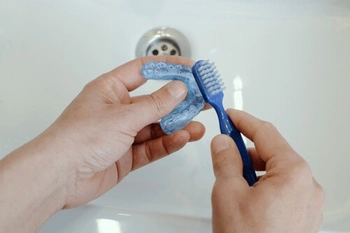 Daily Care Routine
After you wake:
- Rinse your guard under cool water immediately. Avoid hot water, which can alter its shape.
- Gently scrub with mild soap and a soft toothbrush to remove residue.
- Rinse thoroughly and let it air dry on a clean surface.
- Once dry, store it in its ventilated cover or case.
Weekly Deep Cleaning
At least once a week:
- Soak the mouthguard in a bowl of water mixed with a denture cleaning tablet.
- Rinse again to remove any cleaning solution before placing it back in your mouth.
These small habits help eliminate bacteria and prevent discomfort or odour buildup.
When to Replace Your Guard
Even durable guards eventually wear down. You may need to replace yours if:
- It feels loose or changes shape.
- There are visible cracks in the middle or edges.
- It becomes discoloured or develops a persistent smell.
- You experience new pain or uneven bite pressure.
Typically, custom guards last two to five years with good care, while boil-and-bite models may need replacement every few weeks or months, depending on the intensity of your grinding.
Storage Tips
- Keep your guard away from sunlight or direct heat water.
- Avoid wrapping it in tissues, as this can trap moisture.
- Don’t leave it in the bathroom near steam from hot water, as that can warp the material.
- If you travel, use the protective cover for convenience.
Common Cleaning Mistakes to Avoid
- Using toothpaste, as it’s too abrasive and can scratch the guard.
- Using mouthwash, as alcohol can dry and weaken the material.
- Skipping drying time, as moisture encourages bacterial growth.
A clean, odour-free night guard not only keeps your mouth healthy but also makes wearing it each night a much more comfortable experience.
Night Guards for Different Needs and Ages
Not every mouth is the same, and neither are the habits that cause teeth grinding. The right night mouth guard will depend on age, dental history, and how severe the bruxism is.
For Adults
Adults tend to grind their teeth due to stress, sleep disturbances, or bite misalignment. For them, a custom guard made by a dentist is the most reliable choice. It provides strong protection, prevents dental wear, and reduces muscle strain that leads to jaw pain and neck tension.
Many adults also appreciate the convenience and comfort of a durable guard that allows easy breathing through the air passages. Since adult enamel doesn’t regrow, preventing wear early is essential to protect your teeth long term.
For Children
Children may grind their teeth while their jaw grows or as a response to stress. Usually, the condition resolves as they age, but if signs such as headaches, chipped teeth, or sore gums appear, consult a dentist. A soft, flexible guard can offer gentle protection without affecting tooth development.
Parents should monitor sleep habits and encourage regular cleaning with mild soap and cool water. Guards for children should always be replaced as the teeth and bite change.
For People with Braces or Dental Work
If you wear braces or have dental crowns, implants, or fillings, you’ll need a guard that accommodates those features. A custom fit is essential here. It allows space around the brackets while still maintaining a secure seal.
Your dentist can craft a mouthguard that won’t interfere with orthodontic movement or put pressure on braces, ensuring consistent protection for both your teeth and dental hardware.
For Sensitive Mouths or Breathing Issues
Some users find standard guards uncomfortable or bulky. If this sounds familiar, ask your dentist about thinner designs made from soft-touch material or guards with small breathing channels to improve air flow. This can also reduce dryness around the lips and gums, making wear easier through the night.
For Those Recovering from Dental Injury or Surgery
If you’ve had a recent dental injury or oral surgery, such as wisdom tooth extraction or dental restoration, a custom night guard can shield healing tissue from further strain. Your dentist will adjust the shape to avoid pressure on sensitive areas while still preventing grinding.
For Chronic Jaw or Neck Pain
People who experience jaw pain, tightness, or neck strain may notice significant relief after using a night mouth guard consistently. The guard prevents overuse of jaw muscles, allowing them to relax overnight. Reduced clenching often leads to fewer headaches, improved posture, and less discomfort during the day.
Final Thoughts
A night mouth guard might seem like a small accessory, but its impact on your oral health and comfort can be enormous. It shields your teeth from grinding, reduces jaw pain, and supports relaxed, uninterrupted sleep.
Whether you’re dealing with mild bruxism, severe clenching, or recovering from a dental injury, the right guard offers reliable protection every night. From simple boil-and-bite designs to precision custom-fit options, today’s mouth guards cater to all lifestyles and needs for children, adults, and anyone in between.
Caring properly for your mouthguard with cool water, mild soap, and regular cleaning ensures it lasts longer and stays hygienic. If it becomes warped, cracked, or less secure, don’t hesitate to replace it.
If you’re noticing signs like morning soreness, enamel wear, or persistent pain, it’s time to talk to your dentist. They can evaluate your bite, guide you through the fitting process, and recommend a solution that fits comfortably and safely.
If you’re concerned about teeth grinding or want to improve your comfort while sleeping, book a consultation with us at Melbourne Dental Sleep Clinic or call your nearest location:
Caulfield North : (03) 9068 5355
Footscray: (03) 9068 5357
Niddrie: (03) 9068 5316
Resources
Cherney, K. & McLean, A. (2025). ‘10 Ways to Keep Your Teeth Healthy’. Healthline, 13 May. San Francisco, CA: Healthline Media.
https://www.healthline.com/health/dental-and-oral-health/best-practices-for-healthy-teeth
Mayo Clinic Staff. (2024). ‘Teeth Grinding (Bruxism)’. Mayo Clinic, 27 December. Rochester, MN: Mayo Foundation for Medical Education and Research.
https://www.mayoclinic.org/diseases-conditions/bruxism/symptoms-causes/syc-20356095
WebMD Editorial Contributors. (2024). ‘Dental Crowns’. WebMD, 15 October. New York, NY: WebMD LLC.
https://www.webmd.com/oral-health/dental-crowns
Colgate Oral Care Center. (n.d.). ‘What Is Tooth Enamel?’. Colgate, n.d. New York, NY: Colgate-Palmolive Company.
https://www.colgate.com/en-us/oral-health/mouth-and-teeth-anatomy/what-is-tooth-enamel
Cleveland Clinic Staff. (2023). ‘Mouth Guard’. Cleveland Clinic, 10 January. Cleveland, OH: Cleveland Clinic.
https://my.clevelandclinic.org/health/treatments/10910-mouthguards


Sleep is essential for overall health. However, for many people, achieving restful sleep can be difficult due to a condition known as obstructive sleep apnoea Read more