


If you wake with a parched mouth and a scratchy throat after loud snoring, mouth tape for snoring might look like a quick route to better sleep. The idea is simple: seal your lips, breathe through your nose and drift off quietly.
Snoring is rarely just about an open mouth, though. It can start in the nose, the throat or the way your jaw rests during sleep. Understanding what is causing your snoring helps you decide whether tape is worth a try.
Quick Overview
- Mouth tape is a strip of skin-safe adhesive placed across the lips at night to encourage nasal breathing.
- It is often tried by habitual mouth breathers with light snoring, though it does not suit everyone.
- In some cases, it may reduce snoring, but the research behind it is small and mixed.
- A blocked nose or undiagnosed sleep apnoea can change whether tape helps or carries risk.
- Daytime tiredness, gasping at night and nasal blockage usually guide the next step.
Below, we explain how mouth tape works, what the evidence shows and when snoring needs a closer look.
How Does Mouth Tape for Snoring Work?
 Mouth tape holds the lips together during sleep, so airflow runs through the nose instead of the mouth. The aim is to keep the mouth closed and promote nasal breathing, in the hope that it may improve sleep.
When your nasal passages are blocked, your body switches to mouth breathing. In a mouth breather, the jaw tends to drop, and the tongue can settle further back. Snoring is then more likely because tissues at the back of the mouth vibrate more easily than those behind the nose.
At most, tape is a temporary fix. It does nothing for a narrow throat or a deviated septum. Nasal strips work differently by widening the nostrils, but, on their own, they are not expected to stop snoring.
What Does the Research Say About Mouth Taping?
A 2025 review assessed 10 studies involving 213 participants with mouth breathing or sleep-disordered breathing. Of these, only two showed modest improvements in mild obstructive sleep apnoea. The rest found no clear benefit, and even the recorded improvements were probably too small to affect symptoms.
A smaller 2022 study focused on mouth breathers with mild sleep apnoea who could tolerate having their lips sealed. In this group, taping reduced snoring and breathing interruptions. Nasal blockage was treated first, and the study had no comparison group, so its results cannot be applied widely.
Online claims range from better sleep quality to a sharper jawline, and many of these claimed health benefits are anecdotal. The 2025 review did not examine claims about mood, skin or facial structure, so this research offers almost nothing to support them.
What Affects Whether Mouth Tape Is Safe for You?
- Nasal congestion: If you suffer from hay fever, a heavy cold or ongoing blockage, your nose may not carry enough air alone. The 2025 review warned that covering the mouth with a blocked nose could reduce oxygen intake dangerously.
- Possible sleep apnoea: Loud snoring can signal sleep apnoea, a condition where breathing repeatedly slows or stops during sleep. Taping over the symptom may delay an assessment.
- Sensitive skin: Adhesive used night after night can cause skin irritation around the lips.
- The source of the snoring: Snoring from the throat or tongue position may continue with the lips sealed.
Outcomes vary depending on your nose, airway and sleep pattern.
How to Approach Snoring Before Reaching for Tape
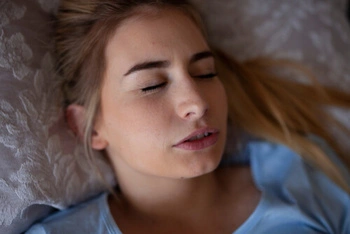 Before you use mouth tape, check how freely you breathe through your nose during the day. If one or both sides often feel blocked, address that first, since tape will not open congested nasal passages. Sleeping on your side and avoiding alcohol before bed may also help reduce snoring.
Waking with a dry mouth, a sore throat or bad breath often points to overnight mouth breathing. Saliva helps protect your teeth, so regular dryness may raise the risk of tooth decay. Your dentist may notice related signs, such as dry or inflamed gums, during a routine check.
Persistent tiredness or breathing pauses noticed by a partner deserve an assessment. Custom anti-snoring devices take a different approach from tape: they hold the lower jaw slightly forward to help keep the airway open. These are medical devices that need fitting and adjustment by a dentist.
A Considered Approach to Mouth Tape for Snoring
Snoring that keeps returning, or that leaves both you and your partner with disrupted sleep, often has more than one cause. At Melbourne Dental Sleep Clinic, our dental, airway and jaw assessment helps us understand what is driving your snoring and which options may suit you. If a sleep study is needed, our team can arrange a referral. Individual outcomes vary. To discuss your snoring, please call us on one of the numbers below:
Caulfield North : (03) 9068 5355
Footscray: (03) 9068 5357
Niddrie: (03) 9068 5316
Frequently Asked Questions
Can children use mouth tape for snoring?
Mouth taping is not considered safe for children. Snoring in children often relates to enlarged tonsils or adenoids, which tape cannot address. If your child snores most nights, a medical assessment can help identify the cause.
What kind of tape is used for mouth taping?
In the 2022 study, researchers used a short strip of hypoallergenic silicone tape, placed vertically from the groove under the nose to the lower lip. They chose it because it is unlikely to cause an allergic reaction and can peel away easily.
Is it normal for mouth tape to come off during the night?
It can happen. In the 2022 study, anyone whose tape had shifted by morning was considered unable to tolerate it and was excluded. Tape that keeps coming loose may suggest nose breathing alone is uncomfortable for you.
Is mouth tape the same as a chin strap?
Both aim to keep the mouth shut, but a chin strap supports the jaw rather than sealing the lips. The 2025 review included studies of both, and the same caution about nasal blockage is likely to apply to any method that stops mouth breathing.
Do I need a referral to see a dentist about snoring?
No referral is needed to book an appointment with our team. It can help to bring your partner, since they can describe how loud your snoring is and when it tends to happen.
References
Monash University. (2025). ‘Please don’t tape your mouth at night, whatever TikTok says’. Monash Lens, May. Melbourne, VIC: Monash University. https://lens.monash.edu/@medicine-health/2025/05/23/1387598/please-dont-tape-your-mouth-at-night-whatever-tiktok-says?amp=1
Lee, Y.-C., Lu, C.-T., Cheng, W.-N. and Li, H.-Y. (2022). ‘The Impact of Mouth-Taping in Mouth-Breathers with Mild Obstructive Sleep Apnea: A Preliminary Study’. Healthcare, 10(9), 1755. Basel: MDPI. https://www.mdpi.com/2227-9032/10/9/1755
Healthdirect Australia. (2023). ‘How to stop snoring’. Healthdirect Australia, November. Canberra, ACT: Australian Government. https://www.healthdirect.gov.au/conditions/sleep-disorders/how-to-stop-snoring
Sleep Health Foundation. (2024). ‘Snoring’. Sleep Health Foundation, March. Australia: Sleep Health Foundation. https://www.sleephealthfoundation.org.au/sleep-disorders/snoring